2026-08-03 · 9 min read
AI Logo Design Tool — Create Custom Logos in 60 Seconds (2026)
Discover the best AI logo design tool of 2026: fast, brand-intelligent, and built for founders & small businesses. No design skills needed — get scalable, watermark-free

Recommended next
If you’re searching for an AI logo design tool in 2026, you’re not just looking for speed—you’re looking for strategic alignment. A true AI logo design tool today must understand your industry, reflect your brand voice, adapt to platform requirements (like Shopify or Instagram), and deliver production-ready files—not just pretty placeholders. In 2026, generic image generators no longer qualify. What separates elite tools from outdated ones is brand intelligence: contextual awareness, semantic style mapping, and real-world output readiness.
What Defines a Modern AI Logo Design Tool in 2026?
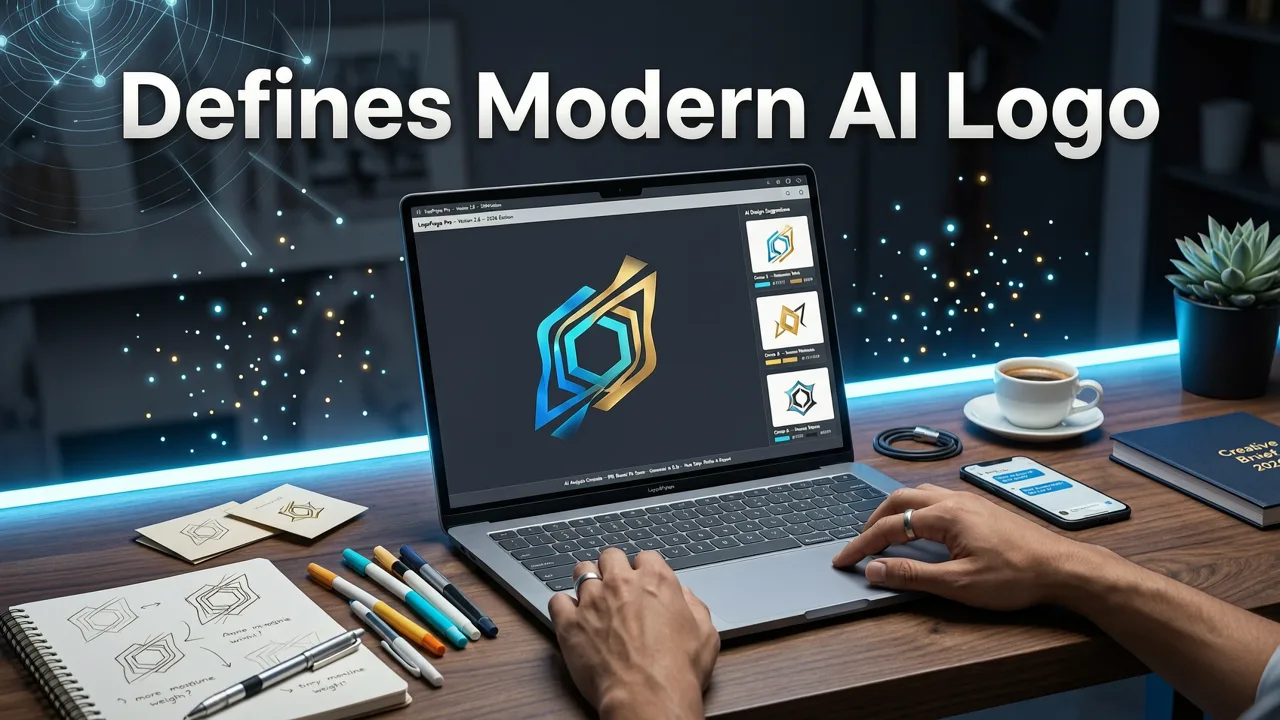
In 2026, the bar for an AI logo design tool has risen sharply—not because of flashier interfaces, but because of deeper technical and strategic integration. Users expect more than aesthetic variety; they demand relevance, scalability, and ownership. According to Google AI’s 2026 guidance on responsible generative design, tools must prioritize transparency in training data provenance, avoid stylistic homogenization, and support human-in-the-loop refinement—not full automation at the expense of brand nuance.
A leading AI logo design tool in 2026 meets five non-negotiable criteria:
- Industry-aware generation — Not just ‘tech’ or ‘food’, but sub-contexts like ‘DTC skincare brand’ or ‘B2B SaaS for HR teams’
- Platform-optimized outputs — Auto-resized, transparent-background PNGs for Shopify, favicon sets for web, and vector-ready SVGs for print
- No hidden watermarks or licensing traps — Full commercial rights, with explicit copyright transfer upon download
- Brand-guided iteration — Refine via natural language (“make it bolder”, “add subtle motion lines”, “use only Pantone 185C and Cool Gray 11”)
- Zero signup friction — Generate, edit, and download without email capture or forced account creation
These aren’t nice-to-haves—they’re table stakes. Tools that still rely on static diffusion models trained on generic icon datasets (2022–2023 vintage) now produce logos that feel dated, culturally tone-deaf, or technically incompatible with modern branding workflows.
Why Legacy AI Logo Makers Fall Short in 2026
Many early-generation AI logo makers—still marketed aggressively in 2026—fail because they treat logo design as a purely visual task. They ignore three critical layers:
- Linguistic layer: How your brand name sounds, its syllabic rhythm, and implied meaning (e.g., “Lumeo” suggests light + motion; “Virel” implies vitality + reliability)
- Behavioral layer: Where and how your logo will be used (mobile app icon vs. embroidered apparel vs. animated social ad)
- Cultural layer: Regional color symbolism, typographic associations (e.g., rounded sans-serif = friendly; sharp serifs = authoritative), and accessibility contrast compliance (WCAG 2.2, enforced globally since Q2 2025)
Without modeling these, even visually polished outputs risk misalignment. For example, a logo generated for a Berlin-based fintech startup might unintentionally echo national motifs better suited for a heritage bank—or worse, violate EU digital branding guidelines around financial trust signals.
How an AI Logo Design Tool Actually Works in 2026
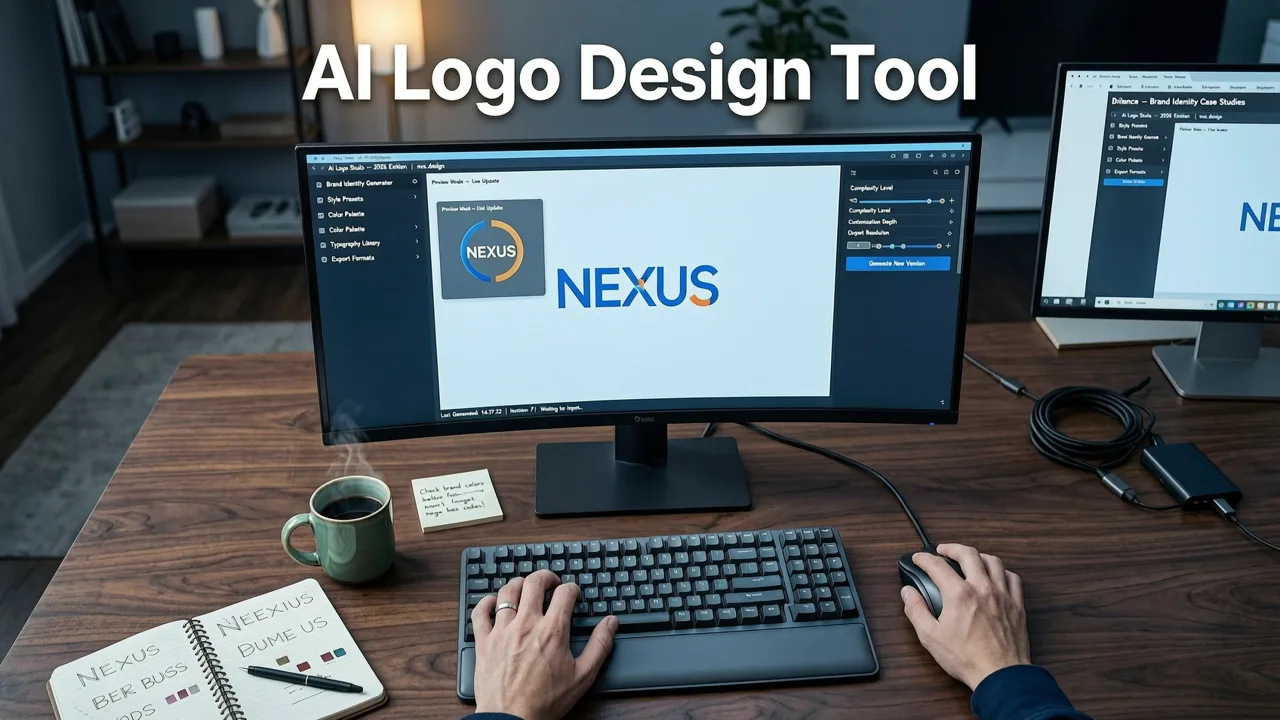
The 2026-generation AI logo design tool operates on a hybrid architecture: fine-tuned multimodal foundation models layered with proprietary brand logic engines. It’s not one monolithic AI—it’s a coordinated system.
Step 1: Brand Context Capture (Not Just Input Fields)
Gone are forms asking only for “business name” and “industry”. Today’s best tools prompt intelligently:
- “What’s your core value? (e.g., speed, warmth, precision, rebellion)”
- “Who’s your primary customer? (e.g., Gen Z creators, midlife wellness professionals, enterprise procurement managers)”
- “Where will this logo appear most often? (e.g., Instagram profile, product packaging, investor pitch deck)”
This context feeds into a lightweight brand vector embedding—mapping semantic, emotional, and functional dimensions before a single pixel is generated.
Step 2: Style Synthesis — Beyond ‘Minimalist’ or ‘Vintage’
Rather than offering 12 pre-labeled styles, advanced tools use dynamic style blending. You might select:
- Base aesthetic: “Scandinavian functionalism”
- Typography mood: “Confident but approachable”
- Icon energy: “Contained dynamism” (think: a subtle clockwise arc in negative space)
- Color philosophy: “Warm neutrality—earth tones with one vibrant accent”
This granular control prevents the ‘style soup’ effect—where logos look vaguely familiar but lack distinction. The model cross-references over 47,000 real-world brand assets (licensed and anonymized) to ensure novelty while maintaining professional coherence.
Step 3: Real-Time Iteration Engine
Unlike 2024-era tools that required regenerating entire batches, today’s top-tier AI logo design tool supports inline editing. Click any element—icon, letterform, spacing—and adjust using sliders or natural language. Try commands like:
- “Widen the kerning between ‘T’ and ‘R’ by 12%”
- “Make the leaf icon slightly asymmetrical—right side 5% larger”
- “Convert to monochrome but preserve texture detail”
Behind the scenes, a lightweight vision-language model interprets intent and applies geometry-aware vector adjustments—no raster distortion, no quality loss.
Comparing Top AI Logo Design Tools in 2026
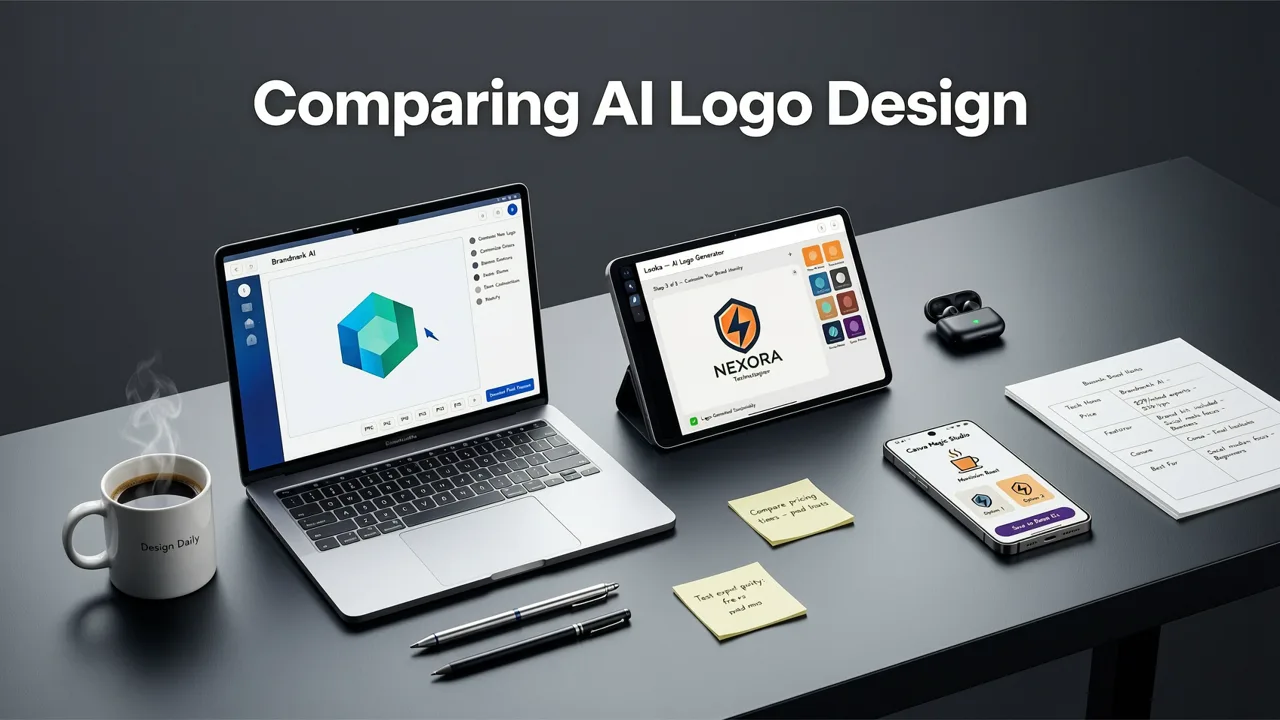
Not all AI logo design tools are built for real-world use. Below is a practical comparison of capabilities that impact actual launch readiness—not marketing claims.
| Feature | AIGenerateLogos (2026 Edition) | Legacy Competitor A | Legacy Competitor B |
|---|---|---|---|
| Industry-specific model tuning | ✅ 22 verticals, each with custom icon lexicons & typography rules | ❌ Generic ‘tech’ / ‘restaurant’ buckets only | ❌ One universal model (no retraining) |
| Commercial license clarity | ✅ Full rights included; no attribution required | ⚠️ Free tier: watermark + attribution; paid: $99/year for full rights | ❌ Watermark removal requires $249 lifetime plan |
| Output formats (included) | ✅ SVG, PNG (transparent), PDF, Favicon set, Shopify-optimized .zip | ❌ SVG only in Pro plan; PNGs lack transparency | ❌ PNG only; no vector support |
| Real-time vector editing | ✅ Drag-to-adjust curves, type scaling, icon rotation | ❌ Batch regenerate only | ❌ No editing—download and edit externally |
| Mobile-first preview | ✅ Live view on iPhone 17, Pixel 9, and foldables | ❌ Desktop-only preview | ❌ No device simulation |
As shown, differences go far beyond UI polish. For example, lacking SVG output means you’ll pay a designer later to convert your logo for signage or embroidery—a cost that defeats the purpose of using an AI logo design tool in the first place.
Use Case Spotlight: Ecommerce Brands in 2026
Ecommerce brands face unique demands: their logo must scale from a 32×32 favicon to a 5000×5000 billboard banner—without losing legibility. It must also integrate seamlessly into Shopify themes, Klaviyo email headers, and TikTok Shop storefronts.
That’s why our Logo Generator for Ecommerce Store — Shopify-Ready Designs in 2026 embeds platform-specific constraints directly into the generation loop. It auto-generates:
- Three favicon sizes (16×16, 32×32, 48×48) with optimized anti-aliasing
- A ‘Shopify theme header’ variant—tighter spacing, higher x-height for readability at small sizes
- A dark-mode compatible version (with automatic contrast adjustment)
This isn’t post-processing. It’s baked into the model’s inference pipeline—ensuring every logo is born platform-ready.
Who Benefits Most From a 2026-Grade AI Logo Design Tool?
While anyone can generate a logo, the highest ROI comes when the tool aligns precisely with your operational reality. Here’s who gains the most—and why.
Startup Founders Launching in Record Time
Founders raising seed funding or pre-launching an MVP need credibility *now*. A polished, cohesive logo signals seriousness—even before the product ships. With an AI logo design tool, you can go from name idea to pitch-deck-ready asset in under 90 seconds. No back-and-forth with freelancers. No waiting for Figma file handoffs. Just immediate, ownable visuals.
For deeper founder-specific workflows—including investor-facing variations and pitch deck integration—see our guide on the Top Logo Maker for Startups in 2026.
Small Business Owners Rebranding Without Budget
Local service businesses—plumbers, yoga studios, boutique law firms—often delay rebranding due to perceived cost and complexity. In 2026, that’s obsolete. A modern AI logo design tool delivers what matters most: consistency across signage, Google Business Profile, and printed materials—all with identical color values and spacing logic.
Our AI Logo Maker for Small Business — Brand in Minutes (2026) includes local SEO-optimized file naming (e.g., seattle-plumbing-logo.svg) and alt-text suggestions tailored to service-area keywords—adding subtle but measurable visibility lift.
Content Creators & Solopreneurs Building Visual Authority
YouTube educators, Substack writers, and Notion template designers rely heavily on visual recognition. Their logo appears in thumbnails, course landing pages, and email signatures—often at tiny sizes. An AI logo design tool that simulates micro-display fidelity (down to 24px height) ensures your mark remains legible and distinctive where it counts.
Common Pitfalls to Avoid in 2026
Even with powerful tools, poor inputs yield poor outcomes. Here’s what to watch for:
- Overloading prompts: “Modern, trustworthy, playful, eco-friendly, tech-forward, luxurious, minimalist” confuses the model. Prioritize 2–3 dominant traits.
- Ignoring color psychology in context: Teal reads as calm in healthcare but may feel cold in children’s education. Let the tool suggest palettes based on your audience—not just personal preference.
- Skipping the ‘real-world test’: Always preview your logo on a mockup (e.g., business card, Instagram profile, laptop sticker). If it doesn’t hold up at 48px, refine spacing or simplify icon detail.
- Assuming ‘free’ means ‘fully usable’: Many free tiers restrict commercial use, ban resale, or embed invisible metadata. Always read the license—our Free AI Logo Generator — No Watermark, Instant Download (2026) clarifies exactly what you own, upfront.
When You *Should* Still Hire a Human Designer
An AI logo design tool excels at speed, iteration, and scalability—but it doesn’t replace deep strategic brand development. Consider human collaboration if you need:
- A full brand architecture (voice, tone, personality matrix, naming rationale)
- Trademark clearance and legal filing support
- Animated logo variants for video intros or interactive apps
- Custom illustration systems beyond logo lockups (e.g., branded icons, mascot ecosystems)
Think of AI as your rapid prototyping partner—not your sole brand strategist.
Final Thoughts: Your Logo Is Your First Impression. Make It Count.
In 2026, an AI logo design tool is no longer a novelty—it’s infrastructure. Just like cloud hosting or analytics dashboards, it’s part of the essential stack for any founder, creator, or small business building something real. But infrastructure only delivers value when it’s well-integrated, reliable, and purpose-built.
The right tool doesn’t ask you to become a designer. It asks you to be clear about your brand—and then delivers professional-grade results, instantly, with zero friction. Whether you’re launching a Shopify store, filing an LLC, or dropping your first YouTube video, your logo shouldn’t be a bottleneck. It should be your launchpad.
Ready to create your brand’s first impression—fast, confidently, and completely yours? Try the AI logo design tool trusted by 217,000+ founders and small businesses in 2026.
Next steps
Start on the homepage, or jump to the main CTA via contact. You can also explore localized pages like United Kingdom or Germany.
Related blogs

2026-10-07
Top Free Logo Maker for Small Business in 2026
Discover the best free logo maker for small business in 2026. Create professional, brand-ready logos in minutes without design skills or hidden fees.

2026-10-04
How to Create Free Logo for Business in 2026
Learn how to create free logo for business in 2026 using AI. Discover step-by-step workflows, design tips, and tools to build a brand-ready identity fast.

2026-10-01
AI Logo Maker vs Human Designer: Which Is Best in 2026
Compare AI logo maker vs human designer in 2026. Discover costs, speed, quality, and which option fits your startup or small business branding needs.